About The House
There are podcasts that tell stories… and then there are places you step into.
The House of Strange is less a show and more a threshold.
It is a narrative-driven podcast that explores real folklore, historical mysteries, and the unexplained, not as distant curiosities, but as living ideas that continue to shape how we think, fear, and believe. Each episode unfolds like a guided descent, drawing from documented accounts, cultural legends, and unsettling case histories to construct stories that feel grounded, immersive, and quietly disorienting.
The tone is cinematic and deliberate. It leans into atmosphere over spectacle, tension over noise. Rather than rushing toward conclusions, the show lingers in uncertainty, allowing details to accumulate, patterns to emerge, and questions to take root. There is a quiet confidence in the pacing, a sense that what matters is not just what happened, but why it continues to matter.
Episodes are structured as layered narratives, moving through distinct acts that build from storytelling into deeper exploration. What begins as folklore or historical account gradually opens into something more analytical, examining the psychological, cultural, and philosophical forces beneath the surface. Belief, perception, memory, and meaning are not treated as side notes, but as central elements of the story itself.
Listeners can expect immersive storytelling grounded in real sources, paired with thoughtful analysis that avoids easy answers. The show does not attempt to prove or disprove the strange. Instead, it asks what the persistence of these stories reveals about us, and why certain ideas refuse to disappear.
This is not a podcast designed to startle you for a moment and move on. It is designed to stay with you. To follow you a little further than expected. To make familiar things feel slightly altered.
Because the world is stranger than you think.
About The Creator
Behind every story in The House of Strange is a single guiding voice, one that moves between research, storytelling, and quiet observation.
My name is Vincent Strange, and I’m based in Arkansas. My background is in UX research and data analytics, which means I spend much of my time studying patterns, behavior, and the ways people interpret the world around them. That same perspective carries into this show. The difference is that here, the patterns are older, stranger, and often far less defined.
I approach each episode first as a researcher, grounding every story in documented accounts, folklore, and historical record wherever possible. These are not invented narratives, but stories that have endured, carried forward through memory, culture, and repetition. My role is to gather those fragments and reconstruct them into something immersive, something that feels less like information and more like an experience unfolding in real time.
But research is only the foundation.
As a storyteller, I aim to guide listeners through these narratives without forcing certainty. The structure of the show allows each story to exist on its own terms before stepping back to explore what may be underneath it. That exploration is where my perspective comes into focus, examining the psychological, cultural, and philosophical forces that give these stories their staying power.
Long before this show existed, my interest in the unexplained was already taking shape. I was a cofounder of a paranormal investigation group during my time in Maryland, and I’ve spent years visiting historic locations where the weight of the past feels almost tangible. Places like Waverly Hills Sanatorium, Winchester Mystery House, and Trans-Allegheny Lunatic Asylum are not just destinations. They are environments where history, story, and perception begin to blur together.
At the same time, my approach to storytelling has been shaped by creators who understand the power of atmosphere and restraint. Podcasts like Lore by Aaron Mahnke left a lasting impression on me, not just in content, but in tone. The way a story is told, the pacing, the silence between words, can be just as important as the story itself. That influence stayed with me long before I ever considered creating something of my own.
At the core of my philosophy is a simple idea. I want to understand why people believe these things. Not just what is seen or reported, but what is felt, remembered, and passed down. Folklore is not just about the strange. It is about the human need to explain what sits just outside of certainty.
At the same time, I believe there is value in allowing the unknown to remain unknown.
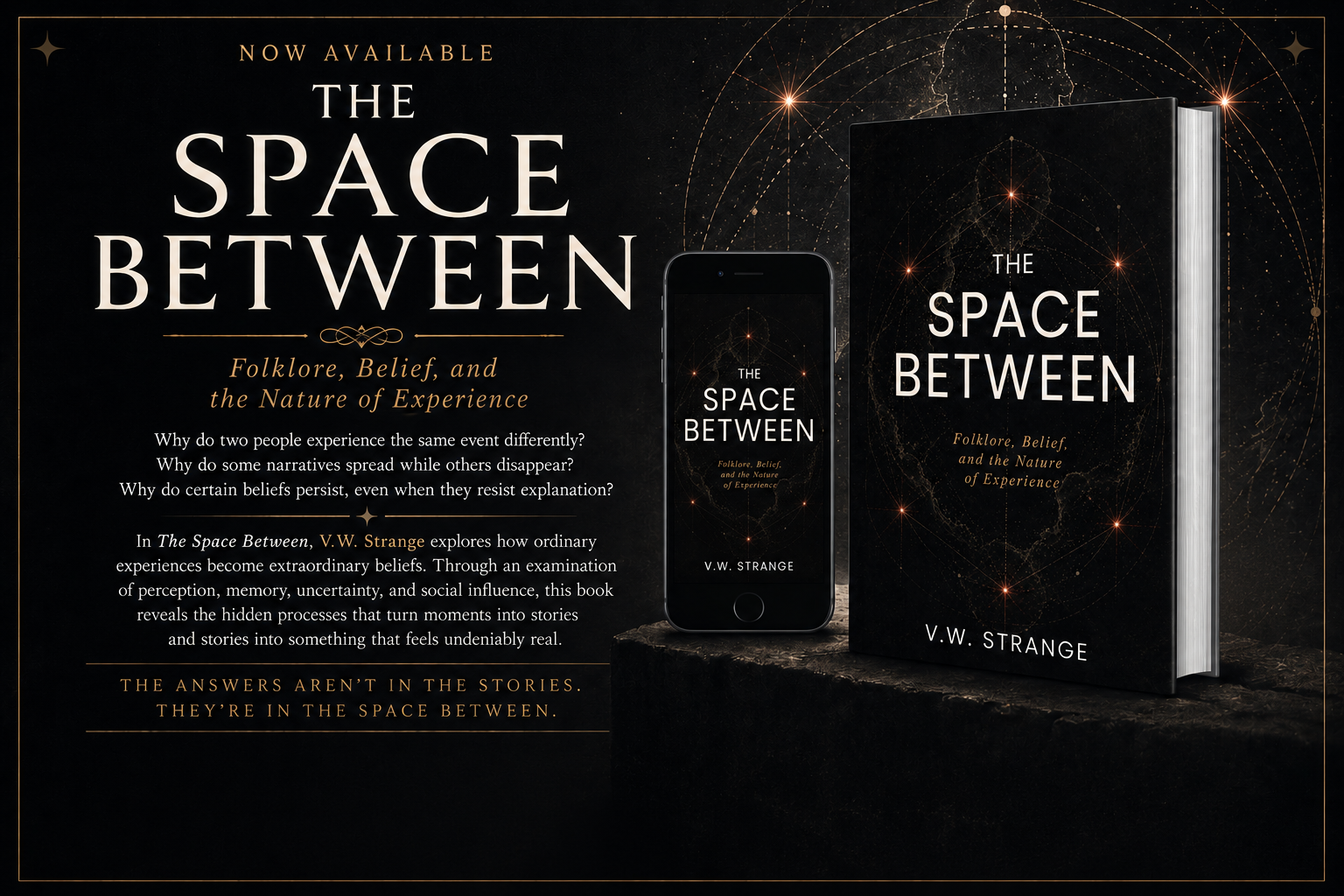
This show does not exist to prove or disprove. It exists to explore. To look at the space where perception and belief overlap, and to ask what lives there. Because that space, where answers are incomplete and meaning is still forming, is where these stories tend to endure.
In The House of Strange, I am not here to give you conclusions.
I am here to guide you through the dark, and let you decide what you see when your eyes adjust.